
Japanese System Integrators (SIers) provide IT services to Japanese firms globally, including in China.
However, their core business model—heavily reliant on “man-month” billing and staff augmentation (SES)—is highly unusual by global standards.
This article explores why this traditional Japanese SIer model is reaching its breaking point.
* Unlike traditional SIers, we are an IT company specializing in Web and Cloud technologies. Learn more about us here.
| 【Japanese IT Enterprise】Our Core Strengths and Specialized Domains | https://beyond-shenzhen.cn/en/blog/beyond-advantages |
Table of Contents
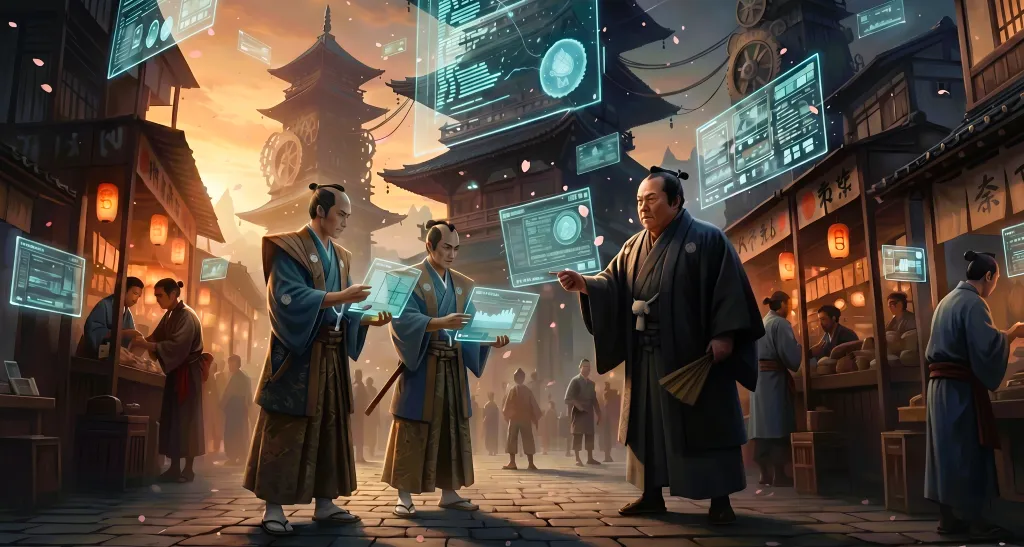
Simply put, a System Integrator (SIer) is essentially an “IT jack-of-all-trades” that takes on virtually any custom system project.
* In the Chinese market, they are equivalent to “System Integrators” or “Solution Providers” .
The prototype of the Japanese SIer business emerged between the 1960s and 1980s, when large mainframes were widely adopted for corporate core systems.
Because a single mainframe failure could paralyze entire business operations, “absolute reliability” and “guaranteed delivery” were paramount. In this environment, the optimal strategy for SIers to minimize risk and earn client trust was to accept every customer request and implement it flawlessly.
This historical context gave rise to the unique structural characteristics of the Japanese SIer model.
First is the “clarification of responsibility.” By strictly adopting the stance of “we built exactly what was requested,” SIers limited their own liability for project outcomes and successfully mitigated risk.
Next is the fixation on “long-term business relationships.” By continuously working with specific clients and gaining a deep understanding of their operations and systems, SIers established a business model that ensured stable, recurring revenue.
However, the core work of Japanese SIers revolves primarily around gathering client requirements and managing project schedules. This forms their typical business model.
Internally, Japanese SIers prioritize “coordination over technical prowess.” The ability to manage subcontractors and align internal departments is valued far more than advanced technical skills.
Consequently, when a Japanese SIer wins a project, they typically outsource the actual work entirely to subcontractors or dispatch engineers to the client’s site under the SES (staff augmentation) model, advancing the project on a man-month billing basis.
This uniquely Japanese model has dominated the country’s IT industry for decades, evolving into an industrial structure deeply intertwined with local social systems and cultural values. Globally, however, it remains an extreme anomaly.
| Key Characteristic | Description |
| Man-Month & SES Revenue Model | A business model billing by headcount and time across all phases, from basic design to maintenance. By charging for labor input rather than project outcomes, it inherently incentivizes maintaining staff levels over driving efficiency or automation. |
| Heavy Reliance on Outsourcing | It is standard practice for the prime contractor to secure a project and outsource the bulk of the work. Prime contractors focus on project management and client relations, leaving the actual development to lower-cost subcontractors. |
| Pyramid-Style Subcontracting Structure | A multi-tiered system where work flows from the prime contractor down through secondary and tertiary subcontractors. Each tier takes a margin, leaving the actual developers at the bottom with inadequate compensation and information, trapping lower-tier vendors in low-margin price wars. |
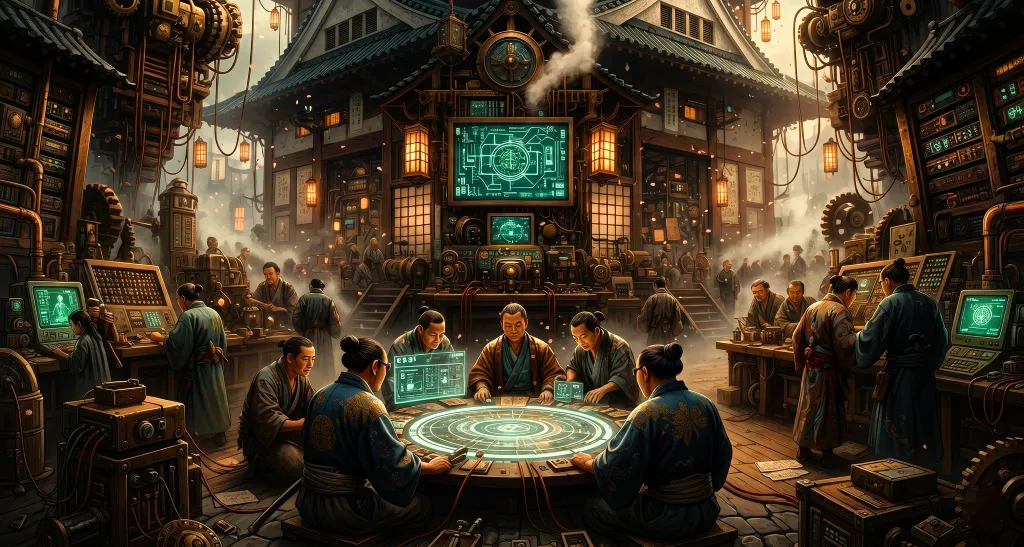
Instead of developing innovative proprietary products, Japanese SIers have built a unique business model focused on accommodating complex—and sometimes irrational—client demands and ensuring their reliable implementation.
In recent years, however, this model has struggled to maintain its competitiveness, even within the domestic Japanese market.
As IT budgets tighten, demand is shifting from expensive, heavy-initial-investment system development to low-cost, flexible solutions leveraging cloud services and open-source technologies. Stricter scrutiny on ROI has made the traditional “man-month model” increasingly unviable.
Driving this shift is the rise of global cloud giants and agile Web/SaaS companies. Mega-platforms like AWS, Alibaba Cloud, and Tencent Cloud now offer comprehensive services for core business systems, fundamentally undermining the SIer’s traditional value proposition of “building custom systems from scratch.” Simultaneously, specialized Web and SaaS firms are leading the market through superior technical prowess and rapid development cycles.
While SIers dedicated to “customer-first” contracting still exist in markets like China, the global cloud giants are undeniably dictating the business landscape and capturing the highest profits. As standardized cloud products expand their dominance, businesses tied to the outdated man-month model simply cannot survive the competition.
Beyond external market shifts, Japanese SIers suffer from a fundamental structural flaw: an almost total lack of innovative proprietary products. Their revenue relies heavily on bespoke system development and maintenance for individual clients, with in-house product sales remaining negligible.
By exhausting their management resources on hyper-customized projects, they have failed to accumulate universally marketable products or scalable know-how. Consequently, their revenue model remains locked into a simple equation: “man-month rate × hours worked.” Under this rigid structure, technological innovations and efficiency gains do not directly translate into revenue growth or improved profit margins.
While this model once pioneered IT adoption for Japanese enterprises, in today’s era of rapid digital transformation, it has become the heaviest shackle hindering the SIers’ own evolution and efficiency.
Underlying the aforementioned market shifts and structural issues is the Japanese “order-taker” business mentality. The traditional transaction culture of “building familiarity first for a long-term relationship” simply no longer works in a global environment that prioritizes clear profitability and rapid outcomes.
Naturally, Chinese SIers and IT firms also track “internal man-hours,” but their business decisions and performance evaluations are strictly anchored to the “final outcome.” Projects lacking direct profitability or deals driven solely by “relationship building” rarely materialize, resulting in a highly rational business framework.
In the Chinese business landscape, concrete results are consistently paramount. At the executive level, quantitative metrics like ROI (Return on Investment), CAC (Customer Acquisition Cost), and LTV (Life Time Value) dictate all decisions, while strict KPI management is enforced at the employee level.
This represents a fundamentally different business philosophy from the Japanese model, which assigns intrinsic value to the relationship itself.

The complex interplay of these factors has shaped the unique structure of the Japanese SIer.
Admittedly, the strengths born from this model—a “deep understanding of complex business systems” and “flawless execution built on absolute trust”—have underpinned Japan’s IT industry for decades. Its historical contributions cannot be ignored.
Moving forward, however, Japanese SIers face a critical turning point for survival. They must transition to a completely new business model: one where they are evaluated and compensated based on actual outcomes, not man-hours.
| China Market Entry Solutions | https://beyond-shenzhen.cn/en/service/china-market-entry |
| Hong Kong SAR IT Solutions | https://beyond-shenzhen.cn/en/service/hong-kong-solutions |
For Website Development and WeChat Solutions
▼ Company WeChat Official Account▼

▼ Contact person in charge WeChat ID ▼


 WeChat Official Account
WeChat Official Account
Person in ChargeWeChat




 【2026】Public Holiday Calendar for China, Japan, and Singapore