Isn’t your career plan still based on the idea of “how to work in the West”?
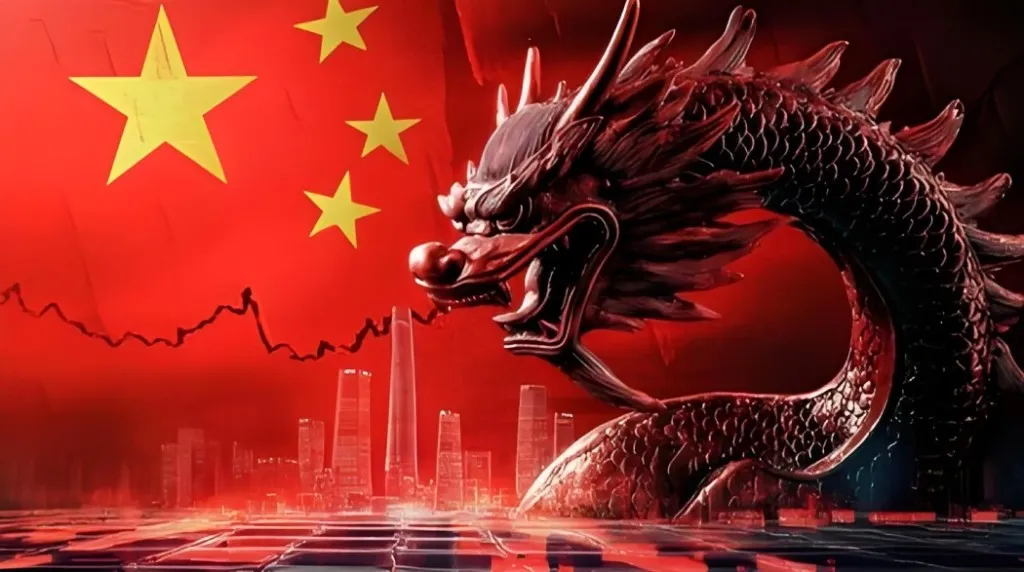
The world’s center of economy, technology, and innovation is rapidly shifting to the Chinese Economic Sphere, with China at its core. Correctly recognizing this change as a business professional will greatly impact your market value.
This article explains “why gaining hands-on experience in China/Asia will become a strength in international business.”
Once upon a time, experience in Western countries like the US or UK was seen as the hallmark of a global professional.
Indeed, not long ago, the centers of economy and technology were in the West, and working there offered a clear advantage for an international career.
However, entering the 2020s, this trend has changed dramatically. The world’s economic, technological, and consumer trend center is shifting to the “Chinese Economic Sphere,” with China at its core.
The broader Chinese Economic Sphere, including not only China but also Singapore and other regions, is strengthening its presence as Asia’s growth engine.
It is no exaggeration to say that experience gained by actually doing business in these countries and regions now holds value that surpasses a Western posting.

Having experienced business expansion in the Chinese market, I strongly feel that “hands-on experience in China” will become a valuable asset in future international business.
In China, business moves at a speed and scale unseen elsewhere in the world. Chinese global companies (like Alibaba, Tencent, Huawei, ByteDance) are emerging one after another, boasting development speed and application skills in fields like AI, FinTech, IoT, and smart cities that rival, or even surpass, the West.
Furthermore, China is not a single, homogenous market but a diverse collection of provinces and cities, each with different cultures and economic zones. Competing in an environment requiring different strategies for places like Beijing, Shanghai, Guangzhou, Shenzhen, and inland regions is akin to experiencing a microcosm of international business itself.
China is both the world’s factory and a massive consumer market. For many industries and sectors, including automobiles, steel, electronics, and chemicals, business cannot succeed without the Chinese market.
Additionally, within RCEP (Regional Comprehensive Economic Partnership), China plays a crucial role as a transit point.
China has achieved a world-leading digital society in areas like mobile payments, AI application, and high-speed logistics. In this society, immediate feedback from a vast user base is used to rapidly improve services.
The environment where such a high-speed improvement cycle can be sustained exists nowhere else but China. This is precisely China’s unique strength.
“But isn’t experience in an English-speaking environment also necessary?”
You might hear such opinions.
Indeed, “experience using English” and understanding “Western-style management” are important in international business.
However, it’s noteworthy that environments to gain such experience are already available in Asia, without physically going to the West. For example, Hong Kong SAR and Singapore function as hybrid cities where you can master Western business culture while staying in Asia.
You can learn English, global management, and Western business culture while also building relationships with Chinese and Western companies. These are truly “training grounds” for the next generation of global professionals.
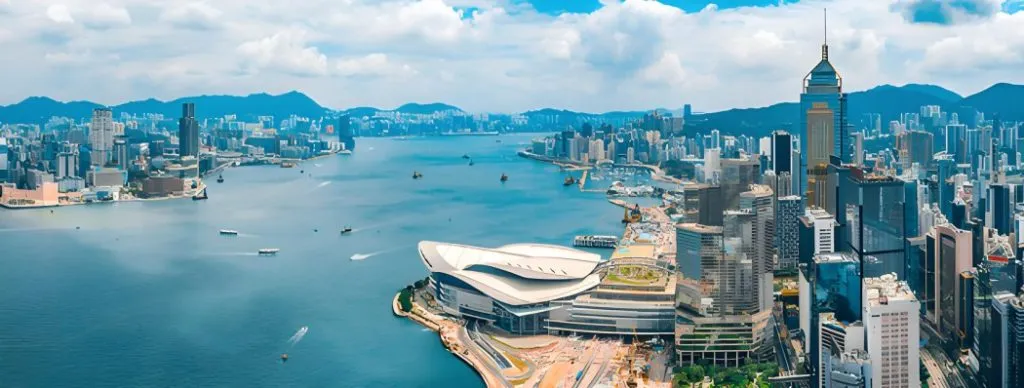
For many years, Hong Kong SAR has functioned as an economic hub where Common Law and Chinese culture intersect.
In finance, securities, and asset management, it adopts regulations and systems fully connected to the West, standing as an international financial city alongside New York and London.
What you gain from working here is not just an English environment, but the real-world scene of conflict and fusion between “Western-style contract culture × Chinese-style negotiation culture.”
Singapore has a diverse cultural background (Chinese, Malay, Indian) while providing an environment to learn rational Western-style management.
With four official languages (English, Mandarin, Malay, Tamil), it has high affinity with both Western and Chinese business.
In fields like global management, economic policy, and legal system design, it serves as a transit point connecting Asia and the world, making it ideal for deepening practical knowledge.
Furthermore, Singapore has developed an advanced ecosystem for startups in finance, logistics, SaaS, and other fields, making it an extremely attractive city as a business base.

These cities are not “alternatives to the West,” but rather places where you can simultaneously acquire both “Western knowledge” and “Asian sensibilities.”
In fact, an increasing number of multinational companies are sending their high-potential employees from North America and Europe to these regions, and this value is being recognized globally.
The era when “you must go West for an international career” is over. “International cities in China/Asia” are becoming the training grounds for next-generation leaders.
Working in international cities in China/Asia offers the following practical advantages that you cannot gain in the West.
| Item | Overview |
| Smaller time difference from China/Japan | Conduct international business at the same level as dealing with the West, almost in real-time, while staying in Asia. |
| Significantly faster business speed | Execution from decision-making to implementation and pivoting happens in much shorter cycles compared to the West. |
| High competitiveness in talent acquisition | Secure excellent talent fluent in English and with Western-style thinking at a more reasonable cost than in the West. |
These cities are all training grounds for next-generation global professionals, offering knowledge that makes you immediately useful in practical settings and an international/Western business sense.
| Aspect | Cities | Overview |
| Contract Culture & Compliance | Hong Kong SAR, Singapore | Common law-based contract thinking and Western-standard internal controls/disclosure are prevalent. |
| International Capital & Finance | Hong Kong SAR, Singapore | Western-style capital raising and distribution mechanisms like VC, IPO, PE function effectively. |
| Talent & Employment Culture | Hong Kong SAR, Singapore | Western-style human resource management such as meritocracy and job-based employment functions. |
| Multicultural Business Elements | Hong Kong SAR, Singapore | Experience diverse hybrid business models mixing Western, Chinese, Malay, Indian influences. |
| Startup Environment | Shenzhen, Singapore | Western-style venture thinking and rapid decision-making. |
In recent years, the center of gravity of the world economy is undeniably shifting towards China and Asia. Physically going West is no longer the only path to “international experience.”
Gaining hands-on experience in the midst of change and growth within the Chinese Economic Sphere is the quality required of business leaders from now on.
| China Market Entry Solutions | https://beyond-shenzhen.cn/en/service/china-market-entry |
| Hong Kong SAR IT Solutions | https://beyond-shenzhen.cn/en/service/hong-kong-solutions |
For Website Development & WeChat Solutions
▼ WeChat Official Enterprise Account ▼

▼ Contact Inquiry Desk on WeChat ▼


 WeChat Official Account
WeChat Official Account
WeChat Inquiry Desk




 【2026】Public Holiday Calendar for China, Japan, & Singapore