
China has three major telecom carriers: China Mobile, China Telecom, and China Unicom.
For foreigners living or working in China, getting a mobile SIM card is a must—but the question “which carrier to choose” soon follows.
Unlike in Japan, where carriers offer fairly similar services, China’s carriers differ in service content and user experience. This is especially notable for Japanese users who want to use their Japan-bought phones (models sold locally in Japan) in China—there are key points to watch for.
This article will explain why China Unicom is more suitable for foreigners and foreign enterprises in China, from a slightly technical perspective, by linking the compatibility between “China’s telecom technologies/frequency bands” and “the frequency bands of Japanese phones.”
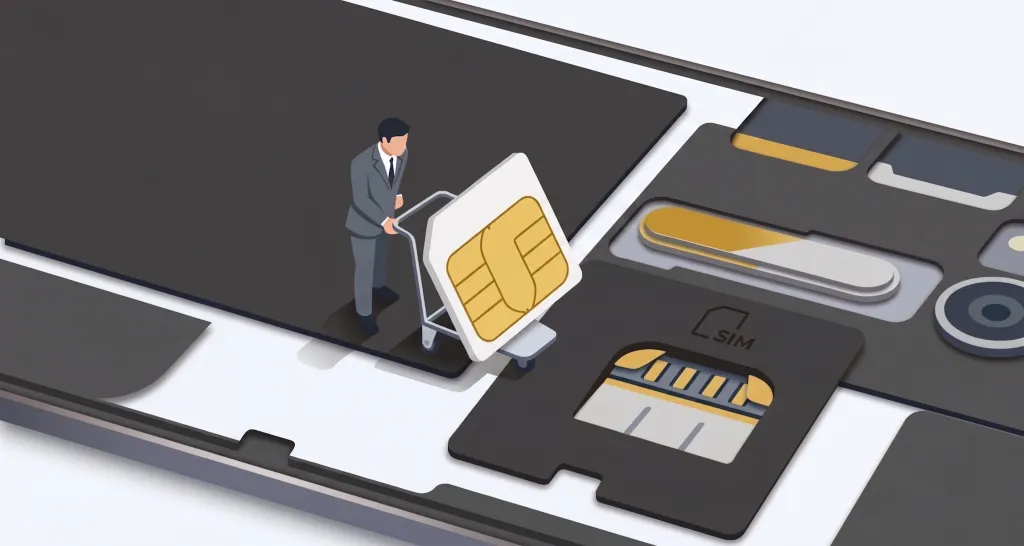
The development of China’s telecom network technology is based on two “modes” with different technical paths. Below is a breakdown of the differences between these two modes.
This is the primary communication technology adopted by China Mobile, also known as Time Division Duplex (TDD) mode.
Its key technical feature is that “upload and download are separated by time and share the same frequency band.” China once promoted it as a national strategy, relying on it to build the country’s most extensive network infrastructure—even in local areas and suburbs, its signal coverage breadth and stability are excellent.
However, this mode has low penetration in Japan and Europe/North America. Most mobile phones produced and sold in these regions do not support this mode in terms of hardware. This is the main technical reason why users bringing phones from Japan often experience unstable signals when using China Mobile SIM cards.
This is the main communication technology used by China Telecom and China Unicom, also called Frequency Division Duplex (FDD) mode.
Its key feature is that “upload and download use separate frequency bands.” As a global standard, it is mainstream in Japan, Europe, North America and most Asian countries—with its biggest advantage being strong international compatibility.
Phones sold in Japan, Europe and North America are designed to support this mode, giving them great device compatibility. Domestically, its signal strength in local areas and suburbs may be slightly weaker than China Mobile’s, but there’s barely any difference in urban areas.
For foreigners using mobile networks in China, the key is to confirm in advance if “communication standards and bands are compatible.”
Notably, China and Japan have different mainstream communication methods—without prior checks, your phone may have no signal or fail to connect to the internet in China.
| – | China Mobile (中国移动) |
China Telecom (中国电信) |
China Unicom (中国联通) |
| Features | |||
| Network Coverage | ◎ Outstanding coverage in local areas and suburbs |
◎ Relatively stable coverage in local areas and suburbs |
◎ Excellent coverage in urban areas and strong international roaming service |
| Recommended User Groups | ・Users with locally purchased Chinese mobile phones ・Users residing in local areas or suburbs |
・Users with locally purchased Chinese mobile phones ・Users prioritizing cost-effectiveness |
・Users with mobile phones bought in Japan, Europe or North America ・Foreign users living in China |
| Communication Specifications(4G / LTE) | |||
| Main Modes | TD-LTE(China’s Mainstream) | FDD-LTE(International Standards) | FDD-LTE(International Standards) |
| Main Frequency Bands(4G / LTE) | |||
| Band 34(2000MHz) | ○ | △ | △ |
| Band 39(1900MHz) | ○ | △ | △ |
| Band 40(2300MHz) | ○ | △ | △ |
| Band 41(2500MHz) | ○ | ○ | ○ |
| Band 1(2100MHz) | △ | ○ | ○ |
| Band 3(1800MHz) | △ | ○ | ○ |
| Band 5(850MHz) | △ | ○ | ○ |
| Band 8(900MHz) | △ | ○ | ○ |
| Communication Specifications(5G) | |||
| Main Modes | 5G NR TDD | 5G NR(FDD / TDD) | 5G NR(FDD / TDD) |
| Main Frequency Bands(5G) | |||
| n41(2500MHz) | ○ | ○ | ○ |
| n78(3500MHz) | ○ | ○ | ○ |
| n79(4700MHz) | ○ | △ | △ |
| n1(2100MHz) | △ | ○ | ○ |
| n28(700MHz) | △ | ○ | ○ |
* Most 5G connections currently use the NSA (Non-Standalone) mode, which “authenticates via a 4G network first.”
In other words, even if a phone supports 5G bands (e.g., n41, n78), it cannot connect to China Mobile’s network if it does not support 4G TD-LTE bands (e.g., band 39, band 40).
We’ve already covered the communication specifications and frequency bands of China’s three major carriers, and now it’s essential to address the frequency band support of “mobile phones bought in Japan (models sold locally in Japan).”
For instance, when using a Japan-bought phone abroad for travel or business, you may sometimes encounter issues like “almost no signal” or “unusually slow internet speeds.” This is actually due to the “frequency bands supported by the phone itself.” The reasons behind this are twofold: first, phones sold in Japan are “optimized for Japan’s local frequency bands,” and second, phones from different Japanese carriers support different frequency bands.
Most recent iPhone models are compatible with global communication specifications and frequency bands, so such issues are relatively rare. However, for “Android phones purchased from Japanese carriers (carrier-customized Android models in Japan),” there are significant differences in the frequency bands they support.
| – | China Mobile (中国移动) |
China Telecom (中国电信) |
China Unicom (中国联通) |
| Features | |||
| Compatibility with Japanese phones | △ (Many incompatible models) |
○ (Most models compatible, few incompatible) |
◎ (Many compatible models) |
| Main Frequency Bands(5G)(4G / LTE) | |||
| iPhone(iOS)
Band 1, 2, 3, 5, 7, 8, 12, 13, 18, 19, 20, 26, 28, 32, 39, 40, 41, 42 |
○ | ◎ | ◎ |
| docomo(Android)
Band 1, 3, 19, 21, 28, 18, 26 |
△ | ○ | ◎ |
| au(Android)
Band 1, 3, 18, 26, 28, 41, 42 |
△ | ○ | ◎ |
| Softbank(Android)
Band 1, 3, 8, 28, 11, 42 |
△ (Partial support) |
○ | ◎ |
| Rakuten Mobile(Android)
Band 3, 18, 26, 28, 42 |
× | ○ | ◎ |
| Rakuten Mobile(5G) | |||
| iPhone(iOS)
n1, 2, 3, 5, 7, 8, 12, 20, 25, 26, 28, 30, 38, 40, 41, 48, 66, 71, 77, 78, 79 |
○ | ◎ | ◎ |
| docomo(Android)
n77, 78, 79, 3, 28, 257 |
△ | ○ | ◎ |
| au(Android)
n77, 78, 79, 28, 257 |
△ | ○ | ◎ |
| Softbank(Android)
n77, 78, 79, 28, 257 |
△ (Partial support) |
○ | ◎ |
| Rakuten Mobile(Android)
n77, 78, 28 |
× | ○ | ◎ |
* Globally, frequency bands used by Japanese carriers are somewhat “unique.” For instance, Band 19 (800MHz) – a key band for docomo, au, and Softbank – is barely used in China, Europe, or North America.
This means many carrier-customized Japanese phones don’t support overseas carriers’ bands. So if you want to use such phones in China or other countries, be sure to check compatibility carefully.
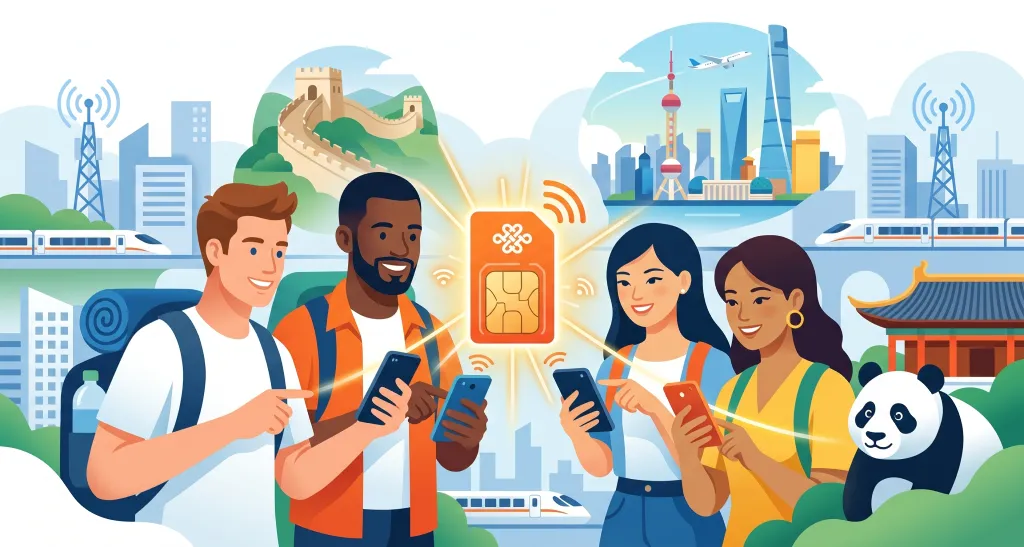
Many users in Japan use iPhones, and this is also true among foreign employees working in China or those staying long-term.
Of course, there are also Android users, as well as short-term visitors to China for travel or business—phone users here are quite diverse.
China Unicom supports a wide range of international standard communication specifications and frequency bands, and this alone is reason enough to recommend it to foreigners in China.
China Unicom adopts the “FDD-LTE (4G)” communication standard, which aligns with the widely used international standards. Thus, globally compatible devices like iPhones boast high compatibility with it, ensuring reliable usage.
Many foreigners now live and work in Chinese cities long-term, and in terms of communication quality within cities, there are basically no issues.
Additionally, China Unicom has strong international cooperation, offering smooth roaming connections with Japan, Hong Kong (China), and other overseas regions—making it a reliable choice even for those coming to China on business trips.
iPhones are close to global universal versions and support a wide range of Chinese carriers’ frequency bands. So inserting a China Unicom SIM card will rarely cause major issues—calls and mobile data work smoothly.
For Android phones, since China Unicom uses internationally common FDD-LTE bands like Band 1 and Band 3, most Android phones from Japan can also connect to its network.
Besides, China Unicom’s data plans are simple and easy to understand, with flexible adaptation for enterprises. For those mainly using phones in cities, it’s definitely a cost-effective choice.
In recent years, “overseas travel eSIMs” provided by eSIM platform operators have become increasingly popular among travelers from Japan, Europe, and the United States.
However, many Japanese users who have purchased these eSIMs frequently report issues such as:
Even when using a smartphone model compatible with the eSIM and having correctly configured APN (Access Point Name) and roaming settings, such problems overseas are not uncommon.
eSIM platform operators are essentially dealers (resellers) that purchase roaming lines from local telecom carriers overseas and provide them to users.
However, the scope of support offered by eSIM platform operators is often limited to providing a list of compatible smartphone models that can use the overseas travel eSIM. In most cases, no consideration is given to the compatibility between the local carrier’s roaming network and the smartphone’s supported frequency bands.
Regarding the SLA (Service Level Agreement) of eSIM platform operators, the typical stance is “please check your device specifications carefully before use,” placing the responsibility largely on the user. In other words, since the frequency bands of the user’s smartphone are generally outside the scope of support, even if the user encounters issues such as “no signal” or “no data connection” with the eSIM while overseas, they cannot expect much assistance from the eSIM platform operator.
* This is particularly relevant for Japanese carrier-branded smartphones (especially Android devices), as their frequency bands are complex. As a result, issues like “no signal” or “no data connection” with eSIMs overseas seem to occur more frequently among Japanese users compared to users from other countries.
Therefore, to use an overseas travel eSIM comfortably on a Japanese smartphone, the following two points must be checked in advance:
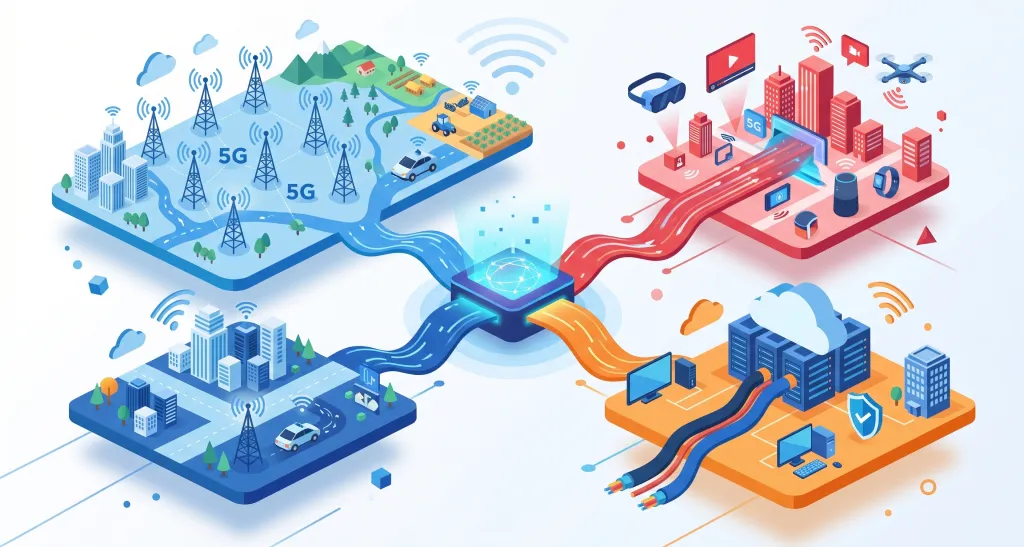
If you are purchasing a SIM card in China, considering compatibility of communication standards, ease of use, and peace of mind, choosing China Unicom is a reliable and safe option.
For those who wish to start their life or work in China smoothly, why not consider a China Unicom SIM card first?
For Website Development & WeChat Solutions
▼ WeChat Official Enterprise Account ▼

▼ Contact Inquiry Desk on WeChat ▼
 WeChat Official Account
WeChat Official Account
WeChat Inquiry Desk




 【2026】Public Holiday Calendar for China, Japan, & Singapore